
Why Walk the AI City?

About The AuthorLovansh Katiyar is an Incoming DPhil student at the University of Oxford, thinking about algorithmic geographies: why [even] to AI, our lived/embodied experiences and ‘participation’ in governance. Thinking beyond participation washing when talking about use of AI in cities, this piece 'walks with' the bodies that become a site of politics of these technologies.
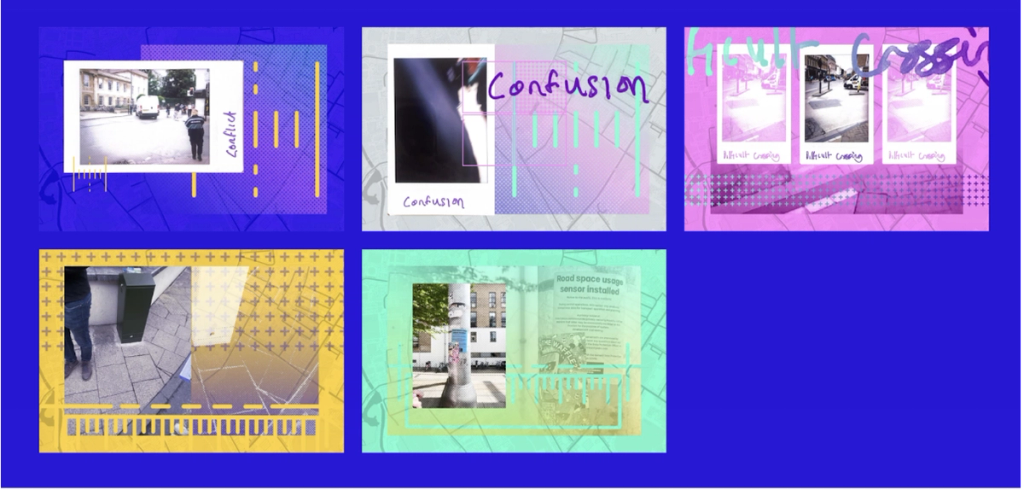
AI City: A Process, not a Form
Who Can Walk Their Neighbourhood?
Faiz was picked up by the police under suspicion of being connected to an alleged crime which occurred in his neighbourhood. The police told the court that a ‘spectacular’ AI-driven Facial Recognition Technology (FRTs) proved Faiz was present in the locality where the crime occurred. However, Faiz’s lawyer questioned why he was singled out for walking in his own neighbourhood, after all, thousands of people were in the area.
FRTs used in Faiz’s case are linked to Delhi’s AI-driven ‘Safe-Smart City Project’ to “enhance women's safety through technological solutions”. The constructs of the ‘safe’ city can be traced to the December 2012 gang rape of a young woman, putting Delhi at the centre of the politics of safety, technology and bodies (Datta, 2020). Now, “Delhi has maximum CCTVs per square mile in the world”, read several headlines (Times of India, 2021). These technologies (like FRT) are deployed on certain bodies over others (Marda, 2020). AI city then becomes a process of organising power, rather than the form [of the surveillance infrastructure] in which the spectacular technology projects itself. The city then becomes a space for contestation with these technologies and, in what follows, potential resistance.
Why Walking the AI City as a Research Method
Most people’s first encounter with AI in the city happens in the street, and projects like AI in the Street (2024) tell us about the twin mechanisms behind cases like that of Faiz, happening across the world:
- AI systems encroach into the city and our lifeworlds through proxies, such as CCTVs, as in Faiz’s case, or other entities like drones, sensors etc. (Datta & Hoefsloot, 2025) which feed into the smart-safe city’s AI systems.
- AI is designed to be doubly invisible, and the algorithms operate beyond the direct line of human senses.
These two mechanisms amplify the continuity of power relations in society and naturalise them.
The Urgency and Implications of Walking through Delhi as AI City
The urgency emerges from three converging factors with global ramifications.
- India is at a critical policy juncture as there is a regulatory vacuum governing the use of AI-driven facial recognition (Internet Freedom Foundation, 2019-24). The courts are currently adjudicating the constitutional validity of AI-driven technologies (Savyasachi, 2025). Research documenting how Delhi's AI-system is operated and lived can provide empirical evidence for policy decisions affecting India's 1.4 billion people (Common Cause et. al., 2023).
- Delhi is a test-bed for the world (Halpern et al., 2013): the "Safe Smart City" model is being sold to over 100 Indian cities and marketed internationally.
- At this conjuncture, only by understanding how AI's 'black-box' entrenches inequality processually in everyday, can we build tools to reverse these processes with those it affects (Castelvecchi, 2016).
Walking in Three Directions
Walking the city visibilises the processes that are designed to be invisible, by focusing on the relationships with these entities and different bodies (Pink, 2009).
While the current literature tells us little about the invisiblised ‘black-box’ of AI,2 there are many speculations on how this spectacular technology works. Rather than merely speculating, walking as research practice foregrounds the everyday lived experiences of oppressed caste3, queer, otherised bodies, which include mine in the city.
Using walking as a primary research method centres the body in ethnography, allowing for gathering evidence to look at the AI city "from below" (De Certeau, 1984; The Walking Lab). Three interconnected reasons justify walking as a research method/practice pull us in three directions:
Direction 1: Walking-ethnographic practice in Delhi is central to understanding three key pieces of evidence on (a) how the city is mapped, (b) who has claims to the city and (c) the 'becoming' of different subjectivities in the city (Philip, 2022).
Direction 2: Place is a central concept in walking research (Lee & Ingold, 2006). Walking reveals social ‘friction’ embodied in the place as a force which works against the movement of bodies. (Middleton, 2010). Traditional ethnographic methods (static interviews, surveys, or observational studies confined to single sites) alone cannot capture how bodies move through surveilled space (McFarlane, 2011).
Direction 3: Walking is itself a practice of resistance and building a collective. In contexts where certain bodies are deemed "out of place", the act of walking is the "quiet encroachment" (Amoore, 2020; Bayat, 2013, Phadke et al., 2022). Women Walk at Midnight (WWAM), a research collaborator, calls walking a practice of "putting bodies on the stage of the city". The method thus doubles as both data collection and praxis.
Walking with the Body of Other
This project was born out of annoyance with Faiz’s (the person in the opening anecdote) well-meaning lawyer. On asking how Faiz felt and his experience, the lawyer reprimanded me, saying, “You expect me to ask an illiterate person what he thinks of these sophisticated technologies?”, deeming his experiences of no value and therefore wrestling with the idea of finding ‘value’, in our lives, in our neighbourhoods, in the very streets, where our bodies become a site of politics. Asking if, by walking – a very mundane everyday process – can help us imagine a city where we can walk into a future that belongs to us? Recentring the intellectual tradition on the body by walking with black-feminist, anti-caste and indigenous oral, lived and written knowledge.
This framework works on the ‘complex connection’ between the disembodied AI city (as the bodies are processually disembodied) and finding or fighting for a right to the city for embodied beings (Krishnan, 2018). By centering the ordinary, everyday experiences of the body in the city, we can demystify the AI city. This allows us to find the everyday ‘blindfields’ (Lefebvre, 1991) of the AI city and how bodies ‘quietly encroach’ into the AI city.
Dr Abhay Xaxa (2011) (Adivasi [indigenous] activist-intellectual) insisted “I am not your data” and taught us to “make own tools to fight own battle”. By building this research practice, we can extend this commitment: working with my communities wronged by AI governance systems, co-creating frameworks for the future of the city rooted in what it means to live these systems, not extracting knowledge, but together imagining a city where we can walk humming our songs of liberation.
Notes:
- AI ‘black-boxes’ are algorithmic systems whose decision-making remains opaque due to corporate secrecy, technical complexity, and data scale, making it difficult to understand or challenge consequential decisions (Pasquale, 2015; Burrell, 2016).
- Caste is a hierarchical system of social stratification determined by birth, operating inequality through principles of purity and pollution, sustained through marrying within caste group (Ambedkar, 1936, p. 72; Dumont, 1980).