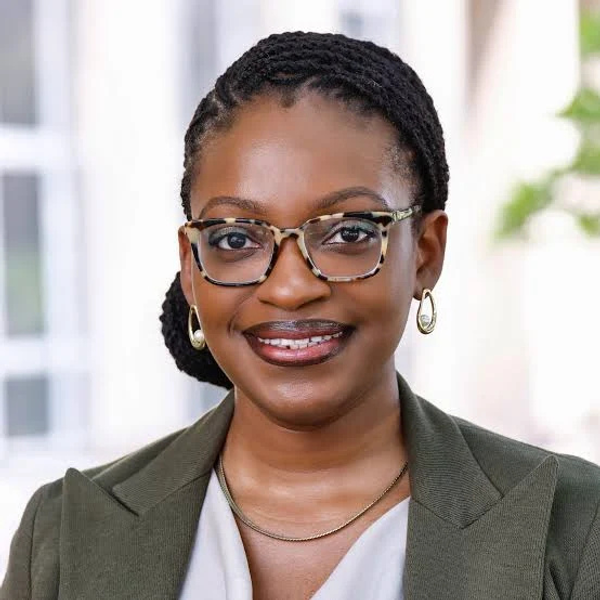
Dr. Chinasa Okolo
Introduction
Dr. Chinasa T. Okolo is the Founder and Scientific Director of Technecultura, a nonprofit research institute and policy incubator advancing global equity in As a researcher and advocate, Chinasa works at the intersection of AI governance, policy, and inclusion, with a particular focus on AI safety for Global South communities, the sociocultural limitations of AI systems, and the geopolitical implications of emerging technology for the African continent.
Interview
How did your journey into AI begin, and how has your background as a Nigerian-American shaped the focus of your work?
My journey into AI began as an undergraduate student, when I conducted research on the ethics of facial recognition systems for my senior-year project. This work exposed me to the inherent flaws within AI systems and increased my passion for inclusive AI. More importantly, I began my work on AI policy during the 4th year of my PhD in 2022, when I saw that the African Union was working on developing a national AI strategy. From there, I began my career at one of the world’s most prominent think tanks, where I had the opportunity to lead projects on global AI governance, AI safety for Global Majority communities, and digital marginalization. As a Nigerian-American, my cultural background has been influential in centering my work on the African continent, and I’m fortunate to travel back frequently to have crucial conversations and convene with stakeholders to forge a universal approach to global AI governance.
Could you share a project or initiative that reflects your vision for more responsible or inclusive AI?
I’m currently working on scaling Technecultura, my nonprofit research institute and policy incubator. After starting my career at major institutions, I felt that building this space to center my work and advocacy is essential to furthering my vision for advancing global equity in AI. In my capacity as the founder and scientific director, I’m mostly focused on producing research and policy analysis on the sociocultural limitations and geopolitical implications of AI.
Where do you see the biggest gap in how AI policy is currently being developed on the African continent, and what would a more effective approach look like?
Developing policy is a great start toward transforming how AI serves excluded communities, but ensuring these policies are codified in ways that enable technological progress, not just as static legal frameworks, is essential. While capacity for AI-specific policymaking is emerging across the continent, there is a strong need for more inclusive processes that prioritize civil society engagement throughout policy development, not just at the feedback or implementation stages.
What advice would you give to young girls who want to shape the future of AI but don’t yet see themselves represented in the field?
I came into policy from a technical background, and I wish that I had taken at least one formal public policy course to provide me with a better grounding in the field as a whole. I’ve learned immensely about the policymaking process through my deep engagement in this domain over the past four years, but it’s been quite hard to make time for structured learning as my work expands.